
Brave Science: Stories of Discovery and Dedication
Neurocrine Biosciences is built upon the foundation of scientific discoveries that contribute to the field of neuroscience. In Brave Science: Stories of Discovery and Dedication, our scientists showcase curiosity and perseverance, driving new advancements in medications for patients with unmet needs.
Our commitment to scientific advancement for patients
Kyle W. Gano, Ph.D., Chief Executive Officer, discusses Neurocrine's dedication to advancing scientific understanding in neurological, neuroendocrine and neuropsychiatric disorders, emphasizing how the company's core values drive the development of effective treatments for patients with significant unmet needs.

The promising pursuit of VMAT2 inhibition
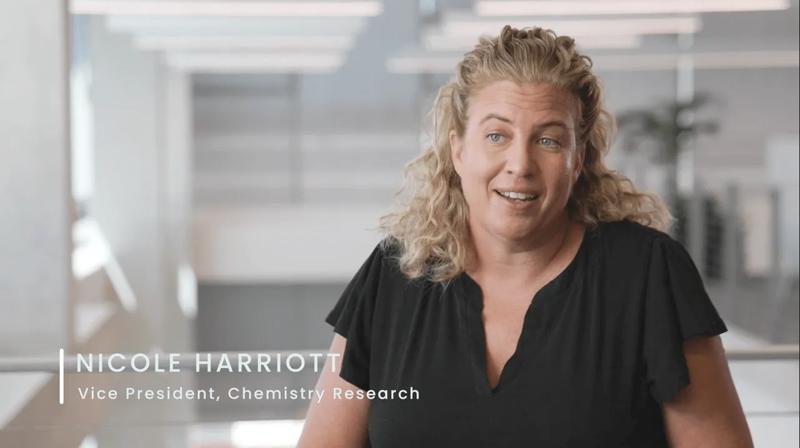
Nicole Harriott, Ph.D., Vice President of Chemistry Research at Neurocrine, provides an insider's look at the company's groundbreaking research on vesicular monoamine transporter 2 (VMAT2) inhibitors and explains what the discovery and development of these treatments means for patients and for researchers working at Neurocrine.
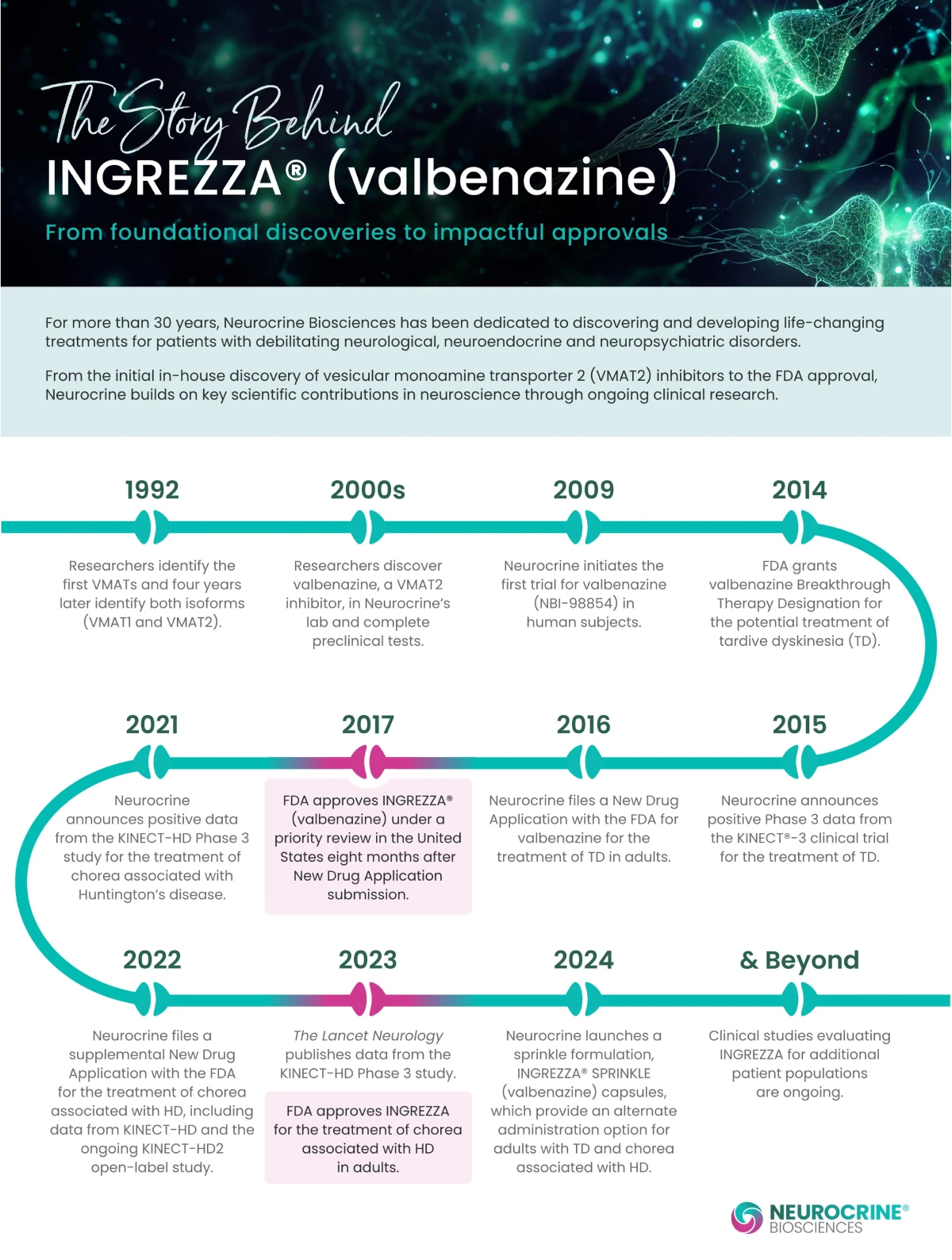
The story behind Neurocrine's first FDA-approved drug
Explore a visual timeline of the discovery of VMAT2 inhibition and the years of research that has led to the first treatment for tardive dyskinesia (TD) on the market.
A transformative approach to congenital adrenal hyperplasia (CAH)
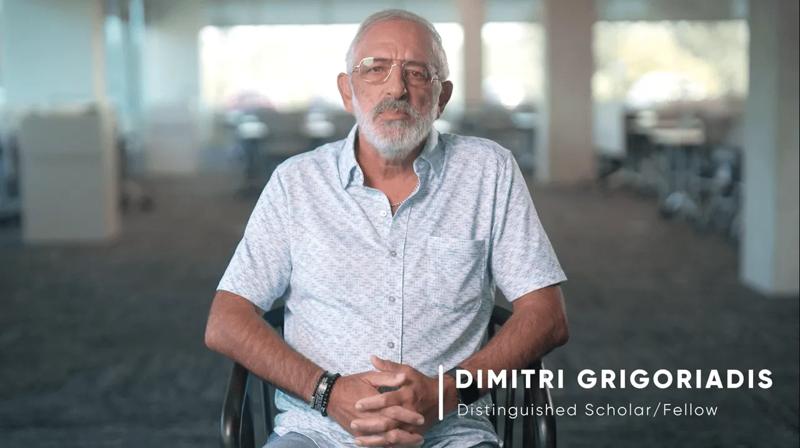
Dimitri E. Grigoriadis, Ph.D., Distinguished Scholar and former Chief Research Officer at Neurocrine, discusses scientific discovery at Neurocrine, understanding CAH, treatment challenges and the CAH community.
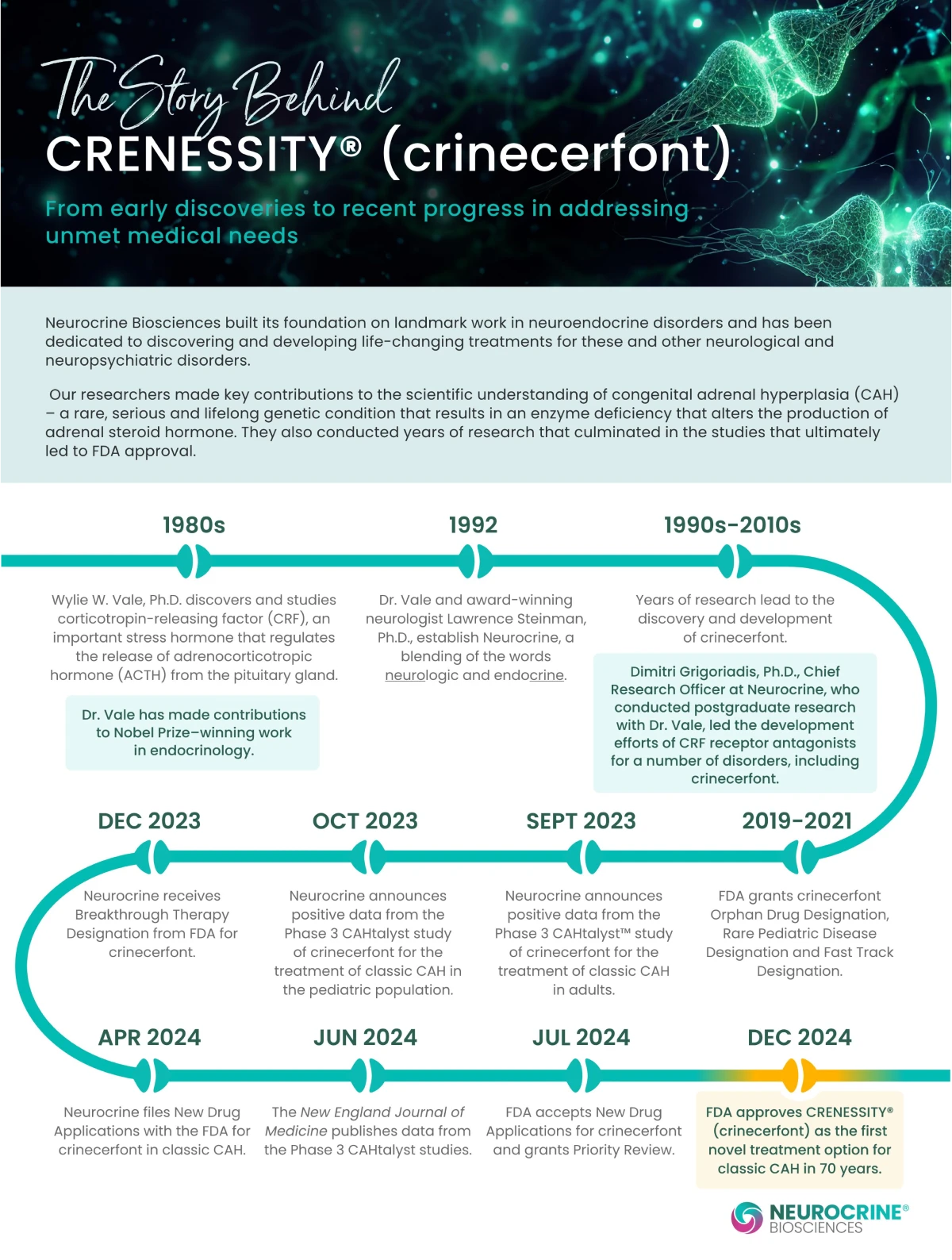
The story behind Neurocrine's first corticotropin-releasing factor type 1 (CRF1) antagonist
Discover key milestones in our legacy of classic CAH innovation, from early research to a first-in-class treatment approval by the FDA.
Our dedicated pursuit of innovative therapies
Pursuing new treatments requires a deep understanding of complex disease biology and an unwavering commitment to the drug development process. For more than 30 years, Neurocrine has been dedicated to discovering and developing life-changing treatments for patients with debilitating neurological, neuroendocrine and neuropsychiatric disorders.
Neuroscience is a notoriously difficult therapeutic area for research and development and comes with an increased risk of failure relative to other areas.¹ We are committed to neuroscience, despite its challenges, as we work to discover new medicines that can improve upon current treatment or alter the progressive course of a neurological disease. From our earliest days, we have placed emphasis on making scientific contributions with the potential to shift treatment paradigms in life-changing ways.
Groundbreaking research in congenital adrenal hyperplasia
Wylie W. Vale, Ph.D., our cofounder, started our foundational work in neuroendocrine disorders when he discovered and studied CRF, an important stress hormone that regulates the release of adrenocorticotropic hormone (ACTH) from the pituitary gland. CRF, as Dr. Vale discovered, plays a key part in the HPA axis (the stress response system consisting of the hypothalamus, pituitary gland and adrenal glands) by regulating the secretion of ACTH from the pituitary gland. This work has led to the understanding of key biological mechanisms that are currently being targeted in the treatment of CAH, a rare, genetic, lifelong and life-threatening disorder caused by an enzyme deficiency.2
Mentored by Dr. Vale, Dimitri E. Grigoriadis, Ph.D. has been studying the role of CRF and its receptors for more than 35 years. Dr. Grigoriadis first served as Director of Pharmacology and Drug Discovery and later as Chief Research Officer at Neurocrine. He has led the development efforts of CRF receptor antagonists for a number of neuropsychiatric and neuroendocrine disorders.
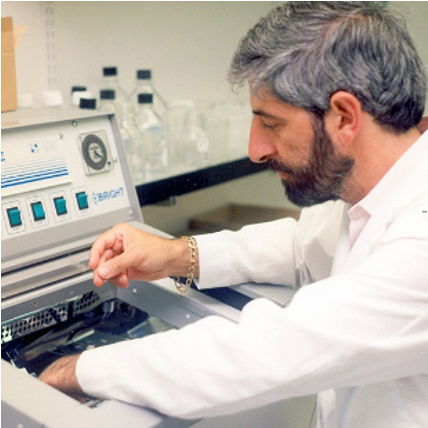
Dimitri Grigoriadis, Distinguished Scholar/Fellow, 1994
Unlocking the potential of VMAT2 inhibition
A passion for fulfilling unmet needs has guided our research efforts and ongoing perseverance throughout our history. VMAT2, a protein in the brain that packages neurotransmitters into vesicles, such as dopamine in presynaptic neurons, was first identified in the 1990s.3 Less than a decade later, an understanding of the critical role of the VMAT2 pathway in regulating movement has led scientists at Neurocrine to synthesize a VMAT2 inhibitor, with the aim of reducing the amount of dopamine released in the striatum — a region of the brain that controls motor function.4
After years of research and clinical trials, the VMAT2 inhibitor we developed in‑house became the first approved treatment option for adult patients with TD, a persistent, involuntary movement disorder.5,6 This was also Neurocrine’s first therapeutic treatment to be approved by the FDA and serves as an example of creativity and efficiency in drug development to help address an unmet need for patients.
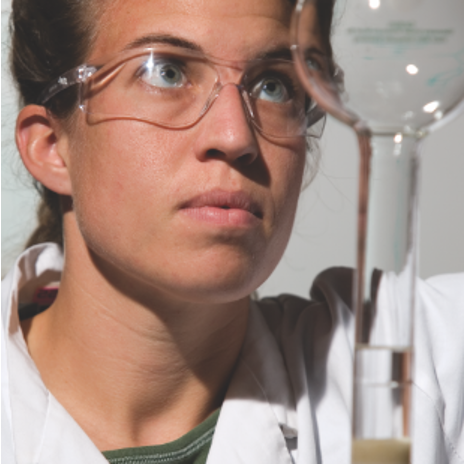
Nicole Harriott, Vice President of Chemistry Research, Approximately 2008
Continuing our contribution to science
These achievements are a result of our dedicated research and development team that strives to make new discoveries and advance science in neurological, neuroendocrine and neuropsychiatric disorders each day. Our scientific curiosity continues to propel us forward; the continued evolution of our research efforts has led to the broadest pipeline in Neurocrine's history. We are also expanding our therapeutic innovations by investing in additional modalities, such as therapeutic peptides, proteins, antibodies and gene therapy. This forward-thinking approach supports our focus on the next generation of treatment.
We are eager to advance and expand on these collective efforts to deliver important improvements in clinical outcomes for patients with great needs.
References
-
Gribkoff VK, Kaczmarek LK. The need for new approaches in CNS drug discovery: why drugs have failed, and what can be done to improve outcomes. Neuropharmacology. 2017;120:11-19. doi:10.1016/j.neuropharm.2016.03.021
-
Momodu II, Lee B, Singh G. Congenital adrenal hyperplasia. In: StatPearls. StatPearls Publishing; 2024. Accessed September 5, 2024. http://www.ncbi.nlm.nih.gov/books/NBK448098/
-
Stahl SM. Stahl's Essential Psychopharmacology. 4th ed. Cambridge, UK: Cambridge University Press; 2013.
-
Patel J, Mooslehner KA, Chan PM, Emson PC, Stamford JA. Presynaptic control of striatal dopamine neurotransmission in adult vesicular monoamine transporter 2 (VMAT2) mutant mice. J Neurochem. 2003;85(4):898-910. doi:10.1046/j.1471-4159.2003.01732.
-
Cloud LJ, Zutshi D, Factor SA. Tardive dyskinesia: therapeutic options for an increasingly common disorder. Neurotherapeutics. 2014;11(1):166-176. doi:10.1007/s13311-013-0222-5
-
American Psychiatric Association. Diagnostic and Statistical Manual of Mental Disorders. 5th ed. American Psychiatric Association; 2013.